Research Projects
Below are selected interdisciplinary research projects that I have completed or am currently leading or contributing to, in collaboration with academic and industry partners.
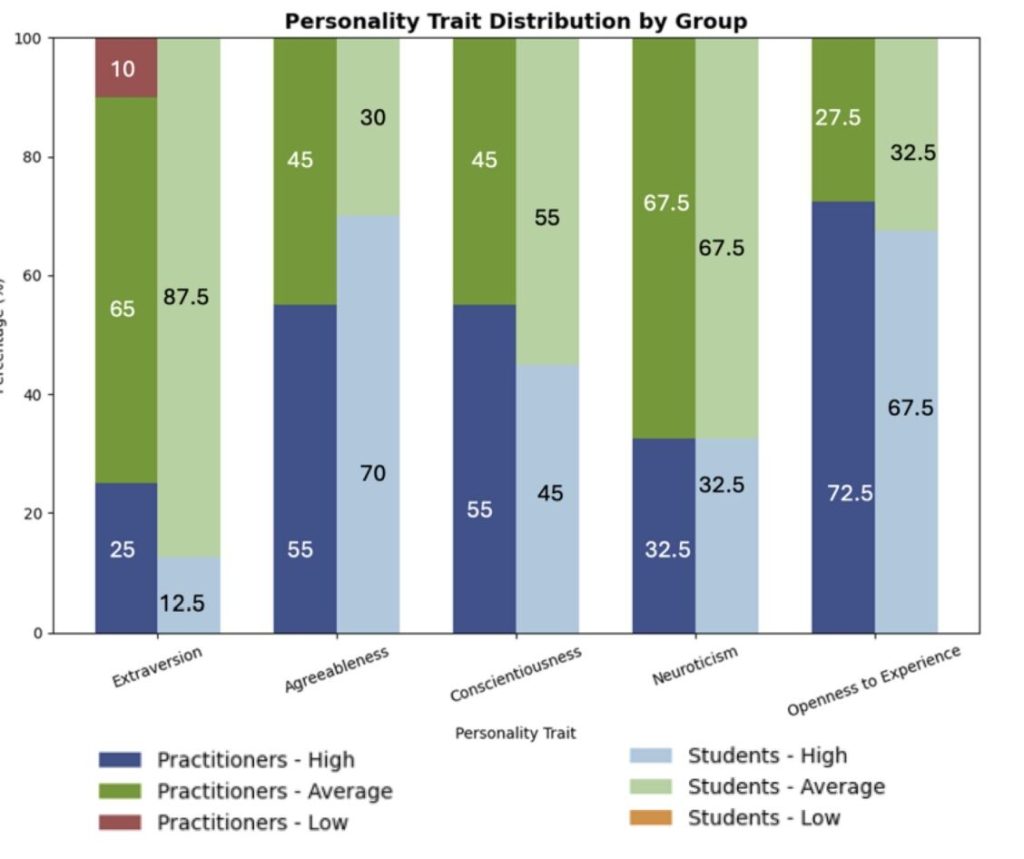
On-going: Understanding the Influence of Cognitive Capabilities and Personality on Software Development Tasks.
- I lead this project in collaboration with Professor Sebastian Baltes (Heidelberg University, Germany), and Professor John Grundy (Monash University, Australia).
- This research examines how software practitioners’ cognitive capabilities influence performance across different software development tasks.
- The first phase of the project was a comparative survey study involving software practitioners and software engineering students, designed to explore relationships between cognitive capability, personality characteristics, and performance on applied software problem-solving tasks. This phase has now been completed, with the findings accepted for presentation at CHASE 2026 conference,Rio de Janeiro, Brazil in April 2026 [Preprint]
- Based on the findings of the first phase, currently we are designing the next phase of the project, which is examining cognitive capability and personality relate to performance across specific software engineering roles and tasks (e.g., requirements analysis, coding, and problem-solving) over time.
On-going: Neurodivergent Women in Software Engineering and Education
- I co-lead this project in collaboration with Dr Wei Wang (School of Business, Monash University), Dr Isma Farah (Faculty of Information Technology, Monash University), and Dr Munazza Zaib (Western Sydney University). The project was initiated with support from an Equity, Diversity, and Inclusion (EDI) grant awarded by Monash University.
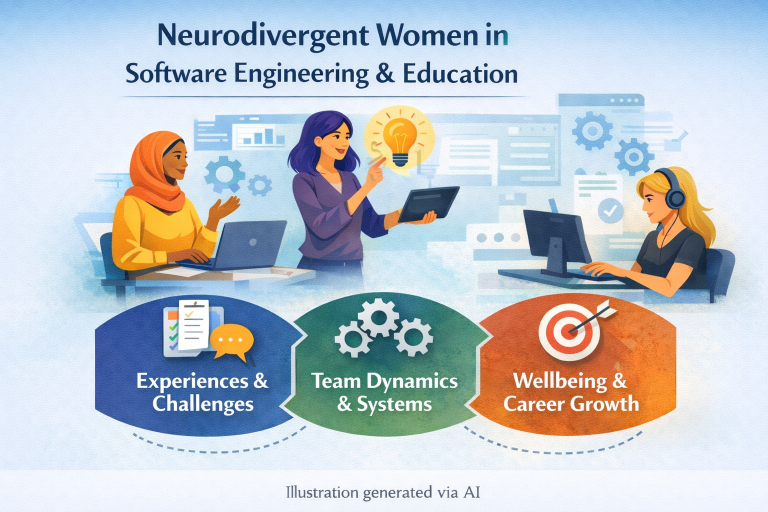
This project examines the experiences, challenges, and support needs of neurodivergent women across software engineering practice and education. Using qualitative and mixed-methods approaches, the study explores how organisational practices, team dynamics, and digital systems shape participation, wellbeing, and career progression.
The first phase of this project, developed as a vision paper, has been accepted for presentation at the ICSE 2026 conference (SEIS track), to be held in Rio de Janeiro, Brazil, in April 2026 [Preprint].
This phase establishes a research agenda to guide subsequent empirical studies and inform inclusive organisational practices, service and systems design, and policy discussions related to equity and workforce inclusion in technology and education contexts.
On-going: Inclusive Early Warning Mobile Application for Vulnerable Population in Australia
- I am collaborating with Dr Anuradha Madugalla (Project Lead, Deakin University), Professor John Grundy (Faculty of IT, Monash University), Associate Professor Jonathan Abrahams (Accident Research Centre, Monash University)
- This project involves empirical research with vision-impaired and mobility-impaired community members, alongside disaster management experts and software professionals, to understand barriers to accessing emergency warning services and technology-enabled support systems.
- The study examines how existing digital warning platforms and service delivery mechanisms can better support communities who are often underrepresented in disaster preparedness and response.
- The project aims to translate empirical findings into evidence-informed recommendations for inclusive service and system design, supporting more accessible and equitable deployment of early warning technologies.
- A paper based on this work is currently under internal review.
On-going: MentalTAC – Mental Health Triage App for Clinicians
- I am collaborating with Dr Agnes Haryanto (Project Lead, Monash University), Jonny Low (Victoria University)
- This project explores human-centred approaches to mental health triage and care decision-making in Australian clinical settings.
- Through empirical, human-centred research, the study examines how mental health clinicians make triage and care decisions in real-world service contexts, and the tools and workflows that support these processes.
- The project contributes to requirements shaping and evaluation for clinician-facing decision-support workflows, with a focus on service effectiveness, usability, and ethical practice.
- To date, the project has included both an empirical study and a systematic literature review (SLR), with both papers currently under internal review.
- The next phase of the project is scheduled to commence in 2026, building on these findings to further inform improvements in technology-enabled mental health service delivery.
- As part of this project, I have co-supervised a Master’s Minor thesis student at Monash University.
On-going: Use of Generative AI Tools in Requirements Elicitation
- I lead this project in collaboration with Dr Mojtaba Shahin, Dr Asangi Jayatilake, Dr Maria Spichkova, Dr Neelofar, Dr Golnoush Abaei (RMIT University)
- This project investigates software practitioners’ perspectives on the use of Generative AI (GenAI) tools in requirements elicitation and professional decision-making contexts.
- The study explores how practitioners perceive the benefits, risks, and limitations of GenAI-supported practices, as well as the implications for responsible use, organisational processes, and human–AI collaboration.
- The project is currently in the data collection phase, gathering empirical evidence to inform responsible GenAI adoption, requirements engineering practices, and policy-relevant discussions around AI use in professional software engineering settings.
Completed: Performance Appraisal for Requirements Engineers
This project was conducted with a final-year undergraduate student team, under my supervision alongside Professor John Grundy.
Building on my PhD research, the study focused on designing a practical tool/plugin to support and enhance the performance appraisal process for requirements engineers (REs).
The project integrated insights from industry practitioners with findings from existing research on performance appraisal in software engineering, with a particular emphasis on requirements engineering practice.
The empirical study for this project has been completed, and a paper based on this work is currently under revision.
Completed: Software Team Members’ Personality on RE & Project Outcome – An Exploratory Case Study
- I led this project in collaboration with a software development team (anonymous), Prof John Grundy, A/Prof Rashina Hoda, and Dr Ingo Mueller.
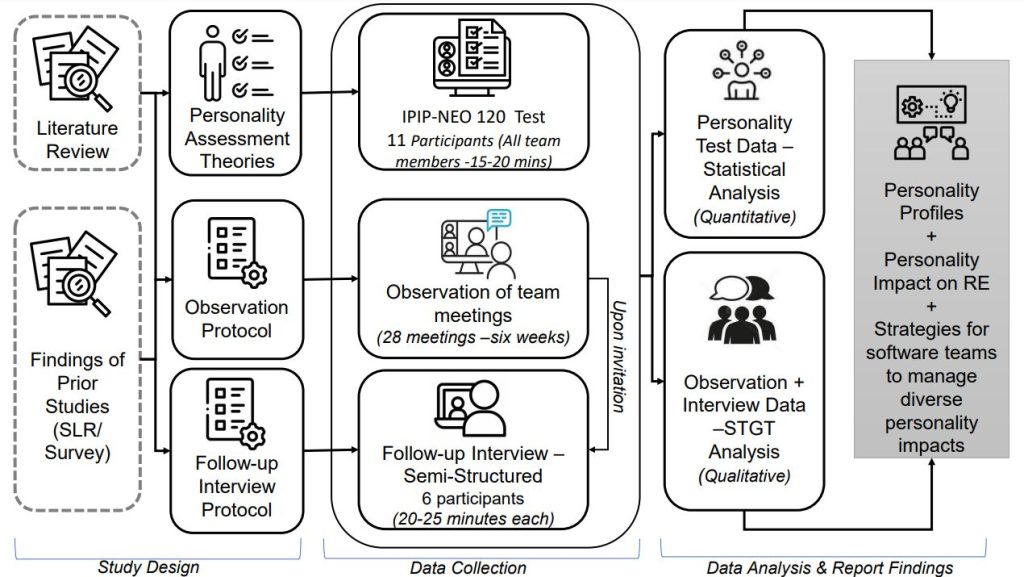
- This was an exploratory case study conducted with a 11-member software development team, observing their team meetings, conducting follow-up interviews and analysing their personality profiles via standard personality test.
- Results: Identified potential impacts of team members’ diverse personality characteristics on RE-related activities, along with a set of strategies that may be useful in overcoming challenges occurred due diverse personalities. These findings may provide a guidance to software teams looking to manage the impact of software team members’ diverse personalities on RE and for researchers to investigate the impacts in diverse contexts.
- The paper based on this study was accepted and presented CHASE 2024 conference (in-person), Lisbon, Portugal in April 2024 [Preprint].
Completed: Influence of the Pandemic on Software Engineering Researchers
- In collaboration with Dr. Anuradha Madugalla (Project Lead), Dr. Tanjila Kanij, Associate Professor Rashina Hoda, Professor John Grundy, and Aastha Pant (PhD Student), I have primarily been involved in the data analysis, reporting, and paper writing phases of the project.
- The project aimed to understand the extent of the impact of pandemic on SE research by conducting surveys and interviews with SE researchers.
- A mixed methods approach- with common statistical methods adopted for quantitative analysis and socio-technical grounded theory for qualitative analysis.
- Results: There were many challenges faced by software engineering researchers during the pandemic, they overcame these challenges by adapting their methods of participant recruitment, data collection and study design. There are several benefits that were identified from conducting human based research during the pandemic and that 30% researchers did not wish to revert back to “the old ways” of doing human-based research.
- We present a model of how our study found that these challenges, adaptations and benefits are linked together. We provide several recommendations on how to conduct effective, remote human-based studies when face to face interaction is not possible due to situations such as pandemic or when remote participation is desired due to geographically diverse participants.
- The paper has been accepted to publish in Empirical Software Engineering (EMSE) journal [Preprint] [Project Summary].


Google Scholar | LinkedIn | Twitter | ResearchGate | RMIT | HumaniSE Lab